Does the Ancient Principle of Ghar Me Mandir Kis Disha Me Hona Chahiye Dictate Your Spiritual Prosperity?

The concept of a home sanctuary is not merely an architectural decision; it is a profound commitment to inviting cosmic resonance into one's domestic sphere. When we contemplate the sanctity of a dwelling, we are essentially navigating the delicate balance between material existence and ethereal connection. A dedicated space for worship serves as the powerhouse of positive vibrations, acting as a spiritual anchor that stabilizes the chaotic energies of modern living. Consequently, understanding the precise alignment of this sacred space becomes paramount for those seeking holistic well-being. It is here that the ancient wisdom of Vastu Shastra intervenes, offering a celestial blueprint for prosperity. The inquiry regarding ghar me mandir kis disha me hona chahiye is not just a question of placement, but a fundamental query into how we align our finite lives with the infinite cosmos.
The Celestial Geometry of the Ishan Kon
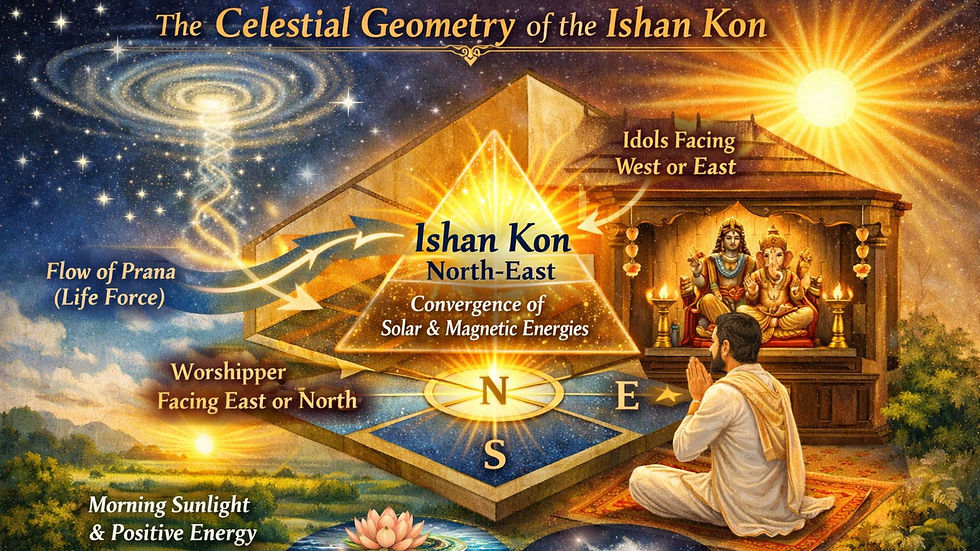
To comprehend the optimal placement of a deity’s abode, one must delve into the vibrational mechanics of the "Ishan Kon," or the North-East direction. In the lexicon of Vastu Shastra, this specific quadrant is revered as the point where magnetic and solar energies converge to create a vortex of auspiciousness. Placing the mandir in this direction ensures that the idols face the West or East, thereby allowing the worshipper to face East or North orientations known to enhance concentration and spiritual intake. This architectural alignment is not arbitrary; it is designed to maximize the influx of morning solar vitality, which is synonymous with clarity and enlightenment. When a homeowner neglects this principle, they inadvertently disrupt the flow of "Prana" (life force) within the household. Therefore, the answer to ghar me mandir kis disha me hona chahiye invariably points toward this luminous North-East corner, a zone dedicated to the divine element of water and the expansive nature of space.
Spiritual Awakening and Numerological Synchronicities

Establishing a temple is a multifaceted endeavor that transcends mere physical location; it involves recognizing the subtle signs of the universe that guide our spiritual maturation. When the environment is attuned to high-frequency vibrations, the worshipper often becomes more receptive to cosmic messages and synchronous events.
Vibrational Alignment: A correctly placed mandir amplifies the efficacy of meditation, creating an atmosphere where the mind can detach from mundane worries.
Interpreting Signs: In this heightened state of awareness, one might encounter the 911 number meaning, which is often interpreted in numerological circles as a powerful sign of transition, spiritual awakening, and the need to trust one's intuition during the journey of enlightenment.
Energetic Consistency: Just as the 911 number meaning suggests a call to lightworking and higher purpose, a Vastu-compliant temple acts as the physical grounding for these elevated spiritual pursuits.
Harmonic Resonance: The purity of the North-East direction supports the vibrational frequency required to understand deep esoteric truths and number synchronicities.
Ritualistic Sanctity and Devotional Recitations

Once the physical placement is secured, the maintenance of the temple’s sanctity becomes a continuous devotional practice. The atmosphere within this consecrated zone must be preserved through regular cleaning, appropriate lighting, and the systematic performance of rituals that honor the deities. It is within this purified air that specific vows and narratives hold the most power. For instance, when a devotee prepares to observe a fast or recite sacred texts, the directional purity amplifies the intent. Engaging in the recitation of the sakat chauth vrat katha in hindi requires an environment free from stagnation and negativity. The North-East corner, being the source of positive energy, ensures that the vibrations generated during the reading of the sakat chauth vrat katha in hindi permeate the entire household, removing obstacles and bestowing wisdom upon the family members.
Architectural Prohibitions and Negative Placements
While knowing the correct direction is essential, being cognizant of prohibited placements is equally critical to prevent the generation of "Vastu Dosha" or architectural defects. Avoiding these negative zones safeguards the sanctity of the divine space.
Avoid the South: The South direction is governed by Yama, the Lord of Death, and placing a mandir here is strictly prohibited as it drains positive energy.
Proximity to Impurities: Never construct the temple adjacent to a lavatory or directly below a staircase, as these areas are associated with heavy, tamasic energies that conflict with the sattvic nature of the shrine.
Bedroom Placement: It is generally advised to avoid placing the mandir in the master bedroom to maintain the celibate and pure energy required for the deities; if unavoidable, curtains must be used.
Clutter-Free Zone: The area surrounding the temple must remain devoid of heavy storage or dustbins, which can stagnate the flow of divine energy.
You can aslo watch : Pyaar, dhan aur sehat ke sabhi sawalon ka ek hi jawab: AstroLive! 🌌
The Culmination of Domestic Divinity
In the final analysis, the pursuit of a harmonious home is inextricably linked to the respect we accord to the divine presence within it. By adhering to the principles of Vastu Shastra, we do not merely decorate a room; we engineer a conduit for blessings and prosperity. The meticulous consideration of ghar me mandir kis disha me hona chahiye serves as a testament to a family's dedication to spiritual order over chaotic randomness. When the temple is correctly aligned, it acts as the spiritual heart of the home, pumping vitality, peace, and protection into every other room. Thus, the physical orientation of our worship space is a direct reflection of our inner orientation toward the divine, bridging the gap between the human and the holy.
Frequently Asked Questions
1. Can I place the mandir in the kitchen if I lack space? Ideally, a mandir should not be in the kitchen due to non-vegetarian cooking or fumes. However, if unavoidable, ensure it is covered and placed in the North-East corner.
2. Which direction should the idols face inside the mandir? The idols should ideally face West or East. This ensures that when you worship, you are facing East (for knowledge) or North (for wealth), aligning with positive magnetic fluxes.
3. Is it acceptable to place a mandir on a floating shelf? Yes, a floating shelf is acceptable provided it is at a height where the deity’s feet are at the devotee's chest level, ensuring respect and ease of prayer during worship.


Comments